
Drainage Systems That Prevent Ice Dams and Foundation Damage
Gutters in Flagstaff for water overflow prevention, ice dam risk reduction, and foundation protection in freeze-thaw mountain climate
Gutters fail in predictable ways at 7,000 feet: ice expansion cracks seams, heavy snow load pulls hangers loose, and freeze-thaw cycles separate joints that were installed without accounting for thermal movement. When gutters fail, water overflows onto foundation perimeters during snowmelt and rainstorms, which leads to basement seepage and foundation settling over multiple seasons. Atlas Roofing of Northern Arizona installs and repairs gutters as part of roof system water management in Flagstaff mountain communities, treating drainage as a component that prevents both ice dam formation and long-term foundation damage. The roofing-first approach identifies gutter failures during roof inspections before water damage compounds into restoration work.
Gutter work begins with assessment of current system capacity and failure points—sagging sections that hold standing water, separated joints that leak during heavy flow, or undersized downspouts that can't handle snowmelt volume. Installation accounts for freeze-thaw movement by using expansion joints and oversized hangers spaced closer than standard residential spacing. Downspout placement directs water away from foundation perimeters rather than dumping it at the building edge where it saturates soil and creates hydrostatic pressure against basement walls.
Schedule a property evaluation to assess gutter capacity and identify overflow points before the next snowmelt season saturates foundation soils.
What Gutter Systems Prevent Long-Term
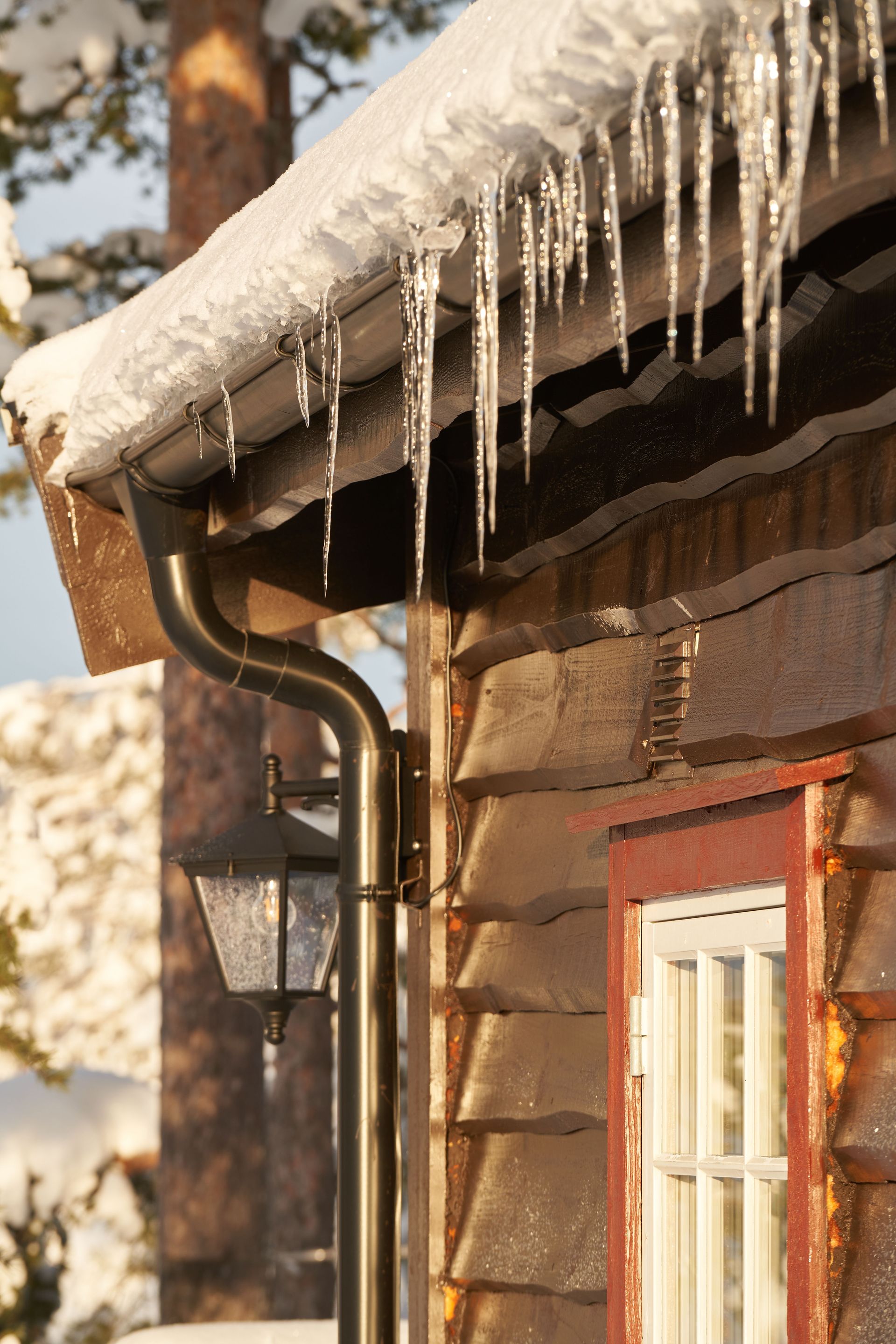
Properly installed gutters channel roof runoff away from foundation perimeters, which prevents soil saturation that leads to basement seepage and settling cracks. Ice dam risk decreases because gutters reduce the volume of water refreezing at roof edges, and controlled drainage eliminates the overflow patterns that form icicles and force melt under shingles. Gutter capacity is matched to roof square footage and regional snowfall intensity, using wider troughs and larger downspouts than standard residential systems in areas with heavy snow load.
After installation, you'll notice water flowing through downspouts during storms rather than sheeting off roof edges, no standing water in gutter troughs after rain stops, and foundation perimeters that remain dry during snowmelt. Ice buildup at roof edges reduces because water exits the system before it can freeze in place. The difference between functional and failed gutters becomes visible during the first significant storm, when properly sized systems handle flow without overflow and poorly sized or damaged systems dump water directly onto foundation walls.
Gutter integration into roof systems matters because failures often originate from roof issues—inadequate drip edge, improper flashing, or shingle overhang that directs water behind the gutter rather than into it. Atlas Roofing of Northern Arizona addresses both the gutter and the roof edge details during installation, which prevents the common failure mode where new gutters are installed on a roof that was never detailed correctly for drainage in the first place.
Questions Before Installing or Repairing Gutters
Gutter work in Flagstaff high-elevation zones raises specific questions about sizing, ice prevention, and how drainage integrates with roof systems.
What type of gutters work best for Flagstaff snow and freeze-thaw conditions?
Seamless aluminum gutters with expansion joints and heavy-duty hangers spaced 16 inches apart handle freeze-thaw movement and snow load better than sectional gutters with standard hanger spacing that pull loose under thermal stress.
How do gutters prevent ice dams?
Gutters reduce the volume of water refreezing at roof edges by channeling snowmelt away before it can accumulate, and proper attic insulation combined with functional gutters prevents the heat loss that melts snow on the roof surface in the first place.
How often do gutters need repair in Flagstaff mountain communities?
Gutter repairs are typically needed every five to seven years in freeze-thaw climate as hangers loosen and seams separate, but systems installed with oversized components and thermal expansion details last longer between service intervals.
What happens if gutters overflow during heavy snowmelt?
Overflow dumps water directly onto foundation perimeters where it saturates soil and creates hydrostatic pressure against basement walls, leading to seepage and settling cracks that compound over multiple freeze-thaw seasons.
Why install gutters as part of roof work instead of hiring a separate gutter contractor?
Roof-integrated gutter installation addresses drip edge, flashing, and shingle overhang details that affect drainage, and a single contractor prevents the common failure where gutters are installed on a roof that wasn't detailed for proper water direction in the first place.
Atlas Roofing of Northern Arizona treats gutters as part of comprehensive roof and water management rather than as standalone add-ons, and the roofing-first approach identifies drainage failures during inspections before they cause foundation or ice dam damage. Request a gutter assessment to evaluate current system capacity and determine whether repairs or full replacement will prevent overflow during the next heavy snowmelt cycle.